
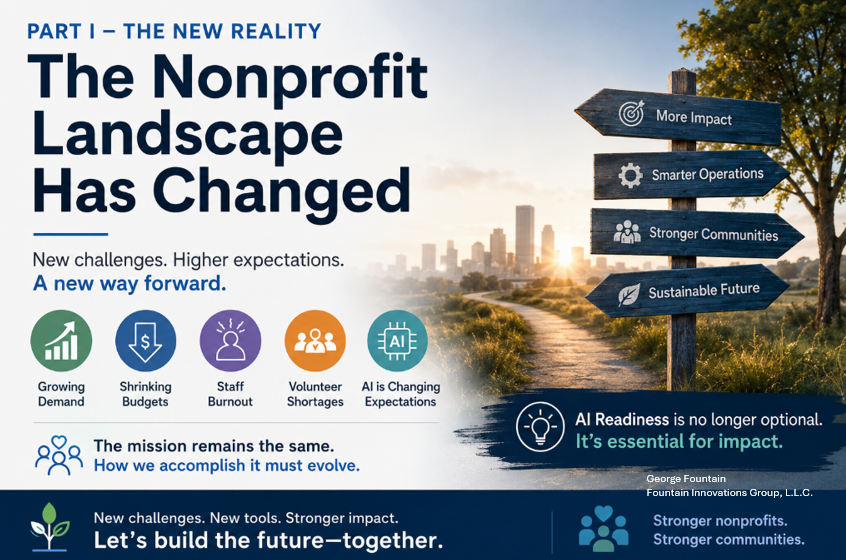
The nonprofit sector is entering a new era. Not because the mission has changed. Because the operating environment has.
Demand for services keeps growing while budgets get tighter and less predictable. Staff is carrying responsibilities that once belonged to two or three people. Volunteers are harder to recruit and retain. Grant competition keeps intensifying. At the same time, donors and funders expect more transparency and more measurable impact than ever before.
And now there is another major shift: Artificial Intelligence.
I believe it’s something much bigger. AI is changing what organizations can accomplish with the same people, the same budget, and the same amount of time. It’s also changing what funders, donors, employees, and communities will soon expect from well-managed organizations.
This isn’t about replacing people. It’s about helping people spend less time on repetitive work and more time advancing the mission. The organizations that prepare now will be able to deliver more impact with limited resources, respond faster to community needs, strengthen their grant competitiveness, build more resilient operations, and attract staff and volunteers who want modern tools that help them succeed.
It isn’t another program to manage. It’s the capability that helps organizations do more with the resources they already have—and determines whether today’s pressures continue to compound or begin to ease.
The nonprofits that thrive over the next decade won’t necessarily be the largest. They’ll be the organizations that learn, adapt, and responsibly embrace new ways of working.
Over the next several posts, I’ll explore what nonprofit leaders should be doing today to prepare.
How is your organization feeling the biggest pressure right now—funding, staffing, volunteer engagement, or keeping up with technology? #NonprofitLeadership #AIReadiness #Nonprofits #GrantReady #ArtificialIntelligence #DigitalTransformation
Visit fig-io.com for more insights
Category: Blog – LinkedIn Updates
Tags: LinkedIn Updates