
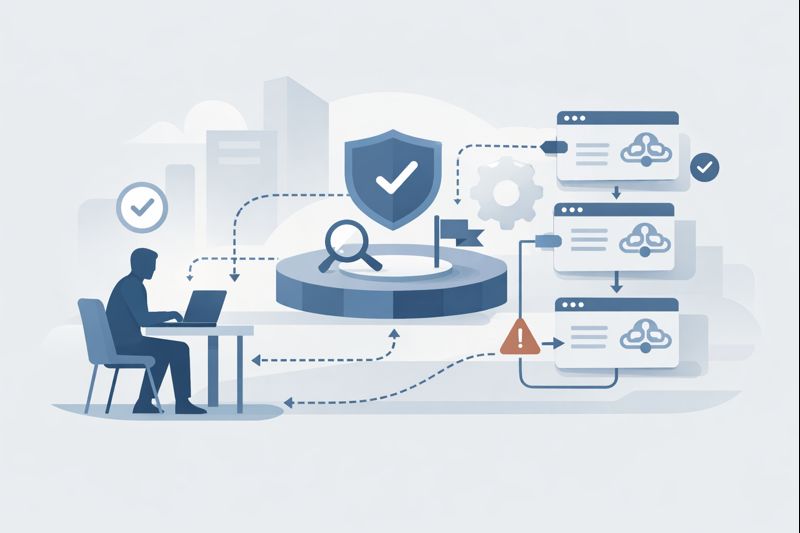
Speaking from firsthand experience, AI agents are not set-and-forget systems. Anyone claiming otherwise has not operated one in production. They are far harder to set up and maintain than most marketing suggests. That said, when agents are designed properly—with clear roles, rules, and ownership—they can materially improve how work gets done. Agents create leverage. They also create fast, quiet failure when the upfront discipline and ongoing governance are skipped. Here’s what leaders need to understand before deploying agents.
A chatbot answers questions. An agent acts. Agents monitor signals, apply rules, trigger actions, and escalate decisions. That makes them useful—and risky. If a chatbot gives a bad answer, you ignore it. If an agent makes a bad decision, it propagates. That difference matters.
You’ll hear terms like canonical workflow or canonical source of truth. Here’s what that actually means: Canonical = the single authoritative version that overrides all others. Agents do not resolve ambiguity. If: Two data sources disagree Two rules conflict Two people think they’re the owner
The agent will still act. It just won’t act correctly. Before agents work, you must define: The canonical data source The canonical ruleset The canonical human authority
This is governance work, not AI work, and it takes time.
Agents fail when treated like task runners. Instead of: “Summarize these documents.” Define a role: “You are a risk analyst. Identify inconsistencies, missing inputs, and anything that could cause downstream failure.” Roles provide context. Context reduces hallucination. This is how experienced managers scale human teams—and it applies here.
Full autonomy sounds efficient. In reality, it creates silent errors. What works: Agent proposes Human approves Agent executes Human reviews outcomes
This is not friction. It’s control. Remove humans too early, and you trade speed for credibility.
Here’s the part demos never show. Proper agent setup requires: Role and boundary definition Canonical source decisions Escalation rules Failure-path testing
For most small teams: weeks, not days. For regulated environments: longer. If someone promises otherwise, ask what they skipped.
Agents drift. Prompts age. Policies change. Data evolves. Edge cases multiply. If no one owns the agent like they own a system, it will quietly degrade. It won’t crash. It will just become less accurate over time. That’s more dangerous.
Early Start with friction, not ambition: Monitoring repetitive signals Drafting first versions Surfacing patterns humans miss Preparing decisions—not making them
If an agent reliably saves 20–30 minutes per person per day, it earns its place. Everything else comes later.
Agents don’t replace people. They expose how work really happens. They reward clarity and punish assumptions. The organizations that succeed with agents aren’t the fastest adopters. They’re the most disciplined operators.
Category: Blog – LinkedIn Article
Tags: LinkedIn Article
Visit fig-io.com for more insights